Research
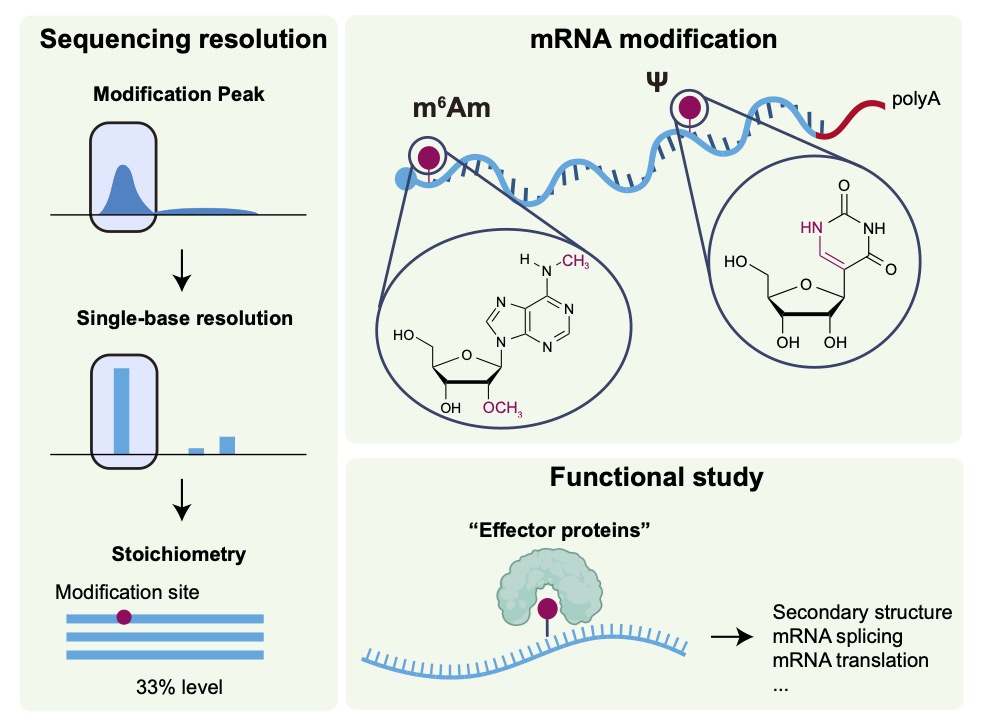
RNA modifications play a critical role in regulating RNA processing and represent a new layer of post-transcriptional gene regulation. These chemical modifications can modulate RNA secondary structure, splicing, stability, and translation efficiency, thereby influencing a wide range of physiological and pathological processes, including embryonic development, tissue differentiation, and tumorigenesis.
Beyond m6A, modifications such as pseudouridine (Ψ), N6,2’-O-dimethyladenosine (m6Am), and N1-methyladenosine (m1A) have garnered considerable attention due to their widespread occurrence in RNA and promising biomedical applications. We develop and employ high-throughput sequencing approaches to investigate the regulation and functional roles of these RNA modifications.
Our research areas
Development of quantitative sequencing technologies for various novel mRNA chemical modifications.
Elucidation of the molecular mechanisms of RNA modifications (such as m6Am, Ψ) in physiological states and disease progression.
Investigation of biological regulatory functions of non-coding RNAs (such as tRNA).